
Home Defense Unit
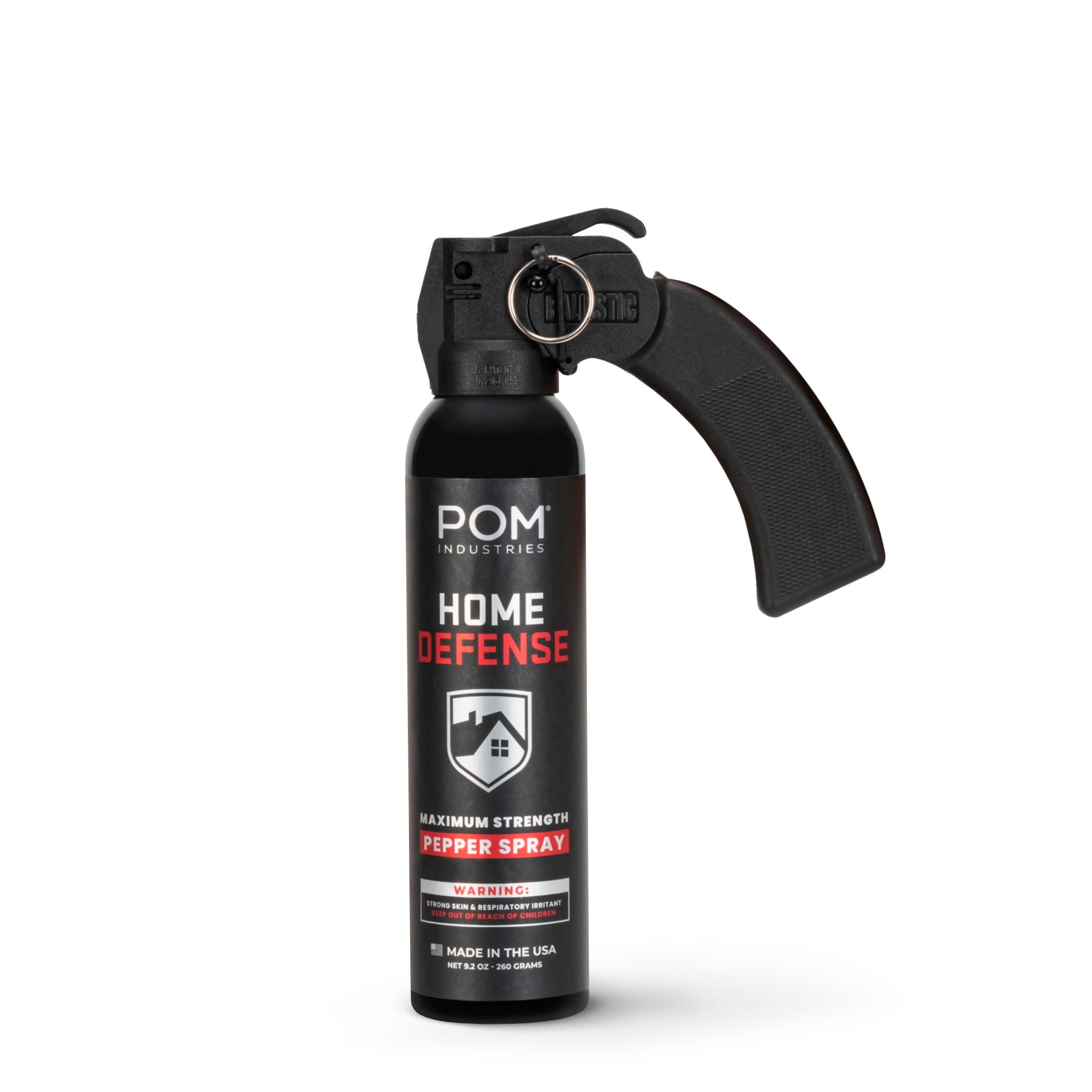
9.2 oz pistol-grip pepper spray with a 20+ ft range.
Shop Home Defense


Lock up, check who's at the door before you open it, and make sure everyone at home knows what to do in an emergency. These steps work in houses and apartments, whether you live alone or with family.
If someone breaks in, focus on getting yourself and your family to safety. Your things can be replaced.
National averages, not a prediction for your home. Sources are listed below.
National numbers can't tell you what will happen at your home. They do point to a few habits worth building.
Share of all US household burglaries, 2003–2007.
Bureau of Justice Statistics, Victimization During Household Burglary (2010). US burglaries 2003–2007, including attempts. Shares of burglaries, not of all homes.
When someone at home was harmed during a burglary, the offender was someone they knew 65% of the time. So keep track of who has your keys and codes, not just how strong your locks are.
The federal estimate for 2025 is 10.5 burglaries or trespasses per 1,000 households, down from 14.0 in 2024 (2025 is preliminary). Fewer break-ins doesn't mean you can skip the basics.
There's no single dangerous hour. But federal burglary data points to three moments that matter.
break-ins happened at night.
break-ins happened during the day.
happened during the day, more than at night (26%).
US household burglaries, 2003–2007, including attempts. Bureau of Justice Statistics, Victimization During Household Burglary (2010), table 9. Some times weren't recorded.
Walk around your home and look for easy ways in. It's the starting point for a more secure home. Here's where to look.
Do they close, latch and lock every time? A deadbolt is only as strong as the door frame around it.
Check the ones you can reach from outside. Locks should catch, and sliders shouldn't lift out of their track.
They're easy to forget. Include the door from the garage into the house when you lock up at night.
Keep entry lights working, and trim plants that hide doors and windows.
Know who has a key or code. Rekey after you move in, and skip the spare under the mat.
Report broken lobby doors or intercoms, and lock your own door even if the building has a front desk.
Anything you add, like a bar or extra lock, should still open quickly from inside so you can get out in a fire.
The warning sign is what someone does: trying to get in, or refusing to take no for an answer. Here's how to respond.
| WHAT YOU NOTICE | WHAT YOU CAN DO |
|---|---|
| Someone tries your door handle or a window. | Stay back, get to a room you can lock and call 911. |
| A visitor pushes to come in and won't let you check who they are. | Keep the door closed. Call the company yourself, using a number you look up. |
| Someone tries to slip in behind you at the building door. | Don't confront them. Get somewhere safe and tell building staff. |
| You come home to an open door or broken glass. | Stay outside and call police from somewhere safe. |
| Someone you know threatens you or won't leave you alone. | Treat it as a real threat. Save the messages and make a safety plan. |
If you can't get out, you'll head to a room you can lock. If you keep pepper spray at home, store it there, out of children's reach, so it's ready without searching for it.
Ask for the visitor's name, company and reason without opening up. Check with the number on your bill, the company's official website or your building manager. A badge, uniform, logo or a phone number the visitor gives you isn't proof.
Try saying: "Please wait outside while I confirm the appointment with the office."
Keep the door closed. Pressure to skip the check is a reason to pause, not to hurry. If you feel threatened, move away from the door and call 911.
Have your key ready and look at the door before you go in. If you think someone is following you, go to a staffed or busy place instead of leading them to your home.
A plan only works if everyone in the home knows it. Talk it through and walk it once. Don't make a test 911 call or stage a surprise break-in.
Pick a safe place to meet outside, and talk about more than one way out. Choose a room you can secure if you can't leave safely, and keep a phone there. A room that works during a break-in may not be safe in a fire.
Think about kids, older relatives, guests and anyone who needs help getting out. Only give someone a job they can do safely. Teach kids to get out and call for help, not to approach an intruder.
Check the doors you actually use before you leave or go to bed. Keep a charged phone near where you sleep, and know how to call 911 from the lock screen. When you travel, have someone collect mail and packages, and consider timed lights.
Know what's monitored, what sets off an alert, who gets it and whether anyone calls for help. Test the system and find out what happens if power or internet goes out.
Use unique passwords, turn on two-step sign-in, keep software and your router updated, and review who can view recordings or change settings, especially after someone moves out.
Your first job is to protect yourself and your family. Don't search the house or go toward a noise to see what it is.
Stay outside. Move somewhere safe and call police. If you think someone is still inside, call 911.
Leave by an exit you can reach without moving toward the person. Leave your things behind. If leaving isn't safe, go to a room you can secure and call 911.
Don't move through danger to gather people. Tell the 911 call-taker where everyone is, and follow their instructions as things change.
Some people with advanced self-defense training and certification choose to hold their position instead of leaving. If that's you, know your state's laws before you ever need them. Most states let you defend yourself and others in your home, but how much force is allowed differs from state to state, and many states limit the force you can use to protect property alone. Good training covers both the law and your own limits.
"My address is [street address], apartment [number]. Someone may be breaking in. I'm in [room]. [Number] people are here. I [can / can't] safely leave. My callback number is [number]."
Say what you actually saw or heard, including whether you saw a weapon. Stay on the line. If talking would put you at risk, text 911 where it's available and include your location.
Wait for police to say it's safe before going back in. Get medical care for any injury. Keep recordings and threatening messages, and avoid touching anything you don't need to. When it's safe, photograph damage, update your home inventory, and arrange repairs and a rekey.
Not every threat comes through a broken door. If a partner, ex, relative or anyone you know threatens you, save the messages, know your exits, keep a phone handy and tell someone you trust.
The hotline can help you make a plan, including how to change shared accounts or locks without tipping the person off.
800-799-7233
Or text START to 88788. Free and confidential. Call 911 if you're in immediate danger.
Every lock and bar on this page should open quickly from inside. Keep exits clear so everyone can get out fast in a fire.
Put working smoke alarms on every level, in each bedroom and outside sleeping areas. Test them monthly and replace them as the instructions say. Use alarms with strobes or bed shakers for anyone who needs them.
Plan two ways out where possible and practice meeting outside. In a fire, get out, close doors behind you and stay out. If smoke or heat blocks your way, keep the door closed, call 911 and give your exact location.
Install CO alarms outside sleeping areas and on each level, following the maker's guidance and local rules. If one sounds, go outside to fresh air, call 911 and wait for responders before going back in. Don't stay to look for the source.

Fire Spray for wood, paper, fabric, flammable liquids and trash fires, a Lithium Ion Battery Fire Suppressant for phones, laptops and e-bikes, and a High Temperature Fire Blanket for kitchen fires. All made in the USA. For small fires only; they don't replace a fire extinguisher. Fire Spray isn't for grease fires.
Visit POM Fire SafetyYou're responsible for where it's stored and how it's used. Getting out and calling 911 come first. Spray is for when you can't leave. Know how it works and the rules where you live.
Keep it where adults can reach it quickly and children can't. Decide where it lives as part of your household plan.
Pepper spray irritates the eyes and airways, and indoors it can affect everyone in the room, including you, kids and pets. Plan your exit route before you ever need it.
Read the instructions, check the expiration date and know your state's rules. A training class helps you act with confidence under stress.

Our largest unit at 9.2 oz, with a pistol-grip handle, a safety pin that prevents misfires and a range of 20+ feet. The same formula as every POM pepper spray.
See the Home Defense UnitGo through this list with the people you live with. Revisit it after a move, a lost key, a new roommate or new equipment.
Start with good locks, working alarms and a charged phone. Then add what fits your home and the people in it.
9.2 oz pistol-grip pepper spray with a 20+ ft range.
Shop Home Defense
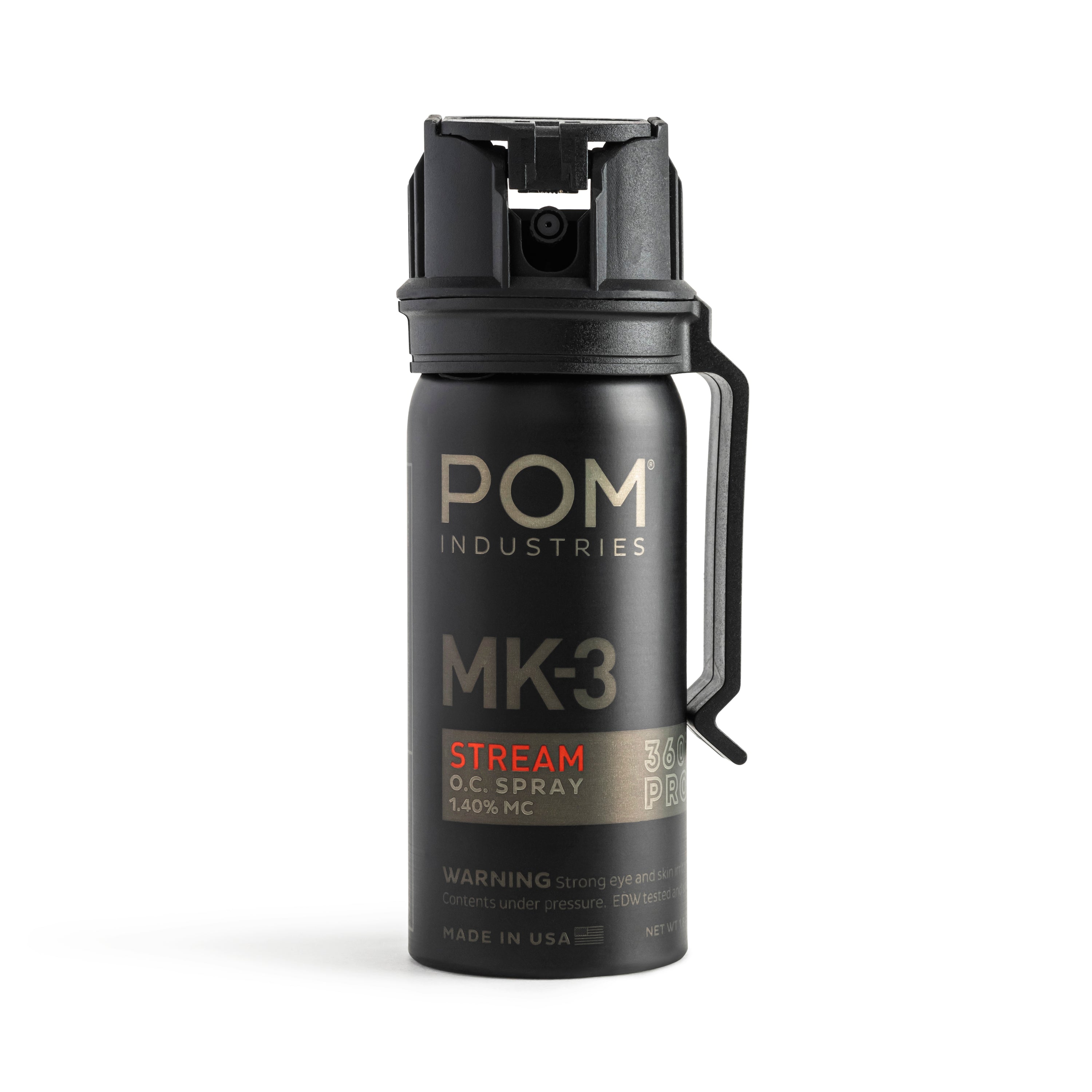
A Home Defense Unit, 2 MK-3s, 2 Keys and 2 Clips, plus 2 free inert units.
Shop the bundle
A 130 dB siren with a built-in LED light. USB-C rechargeable.
Shop Personal Alarm
Fire Spray, a Lithium Ion Battery Fire Suppressant and a Fire Blanket for small fires at home.
Visit POMFireSafety.comThere's no single most dangerous hour. Federal data found more break-ins at night when people were home, and during the day when no one was. Lock up before bed, when you leave and while you're home during the day.
No. Ask for their name and company through the closed door, then call the company using a number from your bill or its official website. A badge or a number they hand you isn't proof.
Stay outside, go somewhere safe and call police. Call 911 if you think someone may still be inside. Don't go in to check.
It can affect everyone in the room, including you, kids and pets. Know your way out, store it away from children and follow the label.
Rules vary by state and city. Check our Pepper Spray Laws by State page and your local rules.
Test smoke alarms monthly and replace them as the instructions say. Maintain CO alarms according to the manufacturer.
More home safety articles from POM.
 Best Self-Defense for Empowering Yourself While Living Alone
Read the article
 Pepper Spray for Home Defense: Things You Need to Know
Read the article
 5 Safety Devices to Consider Purchasing - When Living Alone
Read the article
Make your plan, then choose the tools that fit it.
Shop Home Defense