POM SAFETY GUIDE

Travel with a plan and a way out.

Know where you're going, how you'll leave and who you can contact. These steps work for a weekend road trip, a work trip or a semester abroad.

If someone attacks you, that's on them, not you. Preparing gives you more options, but no plan or product guarantees safety.

ROADS
26%
of reported US citizen deaths abroad from external causes in 2019–2021 were motor vehicle crashes
FLYING
0
pepper sprays allowed in carry-on bags. US flights allow one qualifying spray in checked bags only
PLANNING
3 things
to know every trip: where you're going, how you'll leave and who you can contact

These figures come from federal travel data and FAA rules, not your odds on any trip. Sources are listed below.

THE NUMBERS

What travel safety statistics really tell us.

Most travel data counts events, not the risk of a particular trip. The clearest lesson in it is about how you get around.

Reported deaths of US citizens abroad from external causes

1,534 deaths reported to a US embassy or consulate, 2019–2021.

Motor vehicle · 402 (26%)
Homicide · 292
Suicide · 225
Drowning or maritime · 206
Aviation · 57
Drug related · 30
Terrorist action · 15
All other · 307

CDC Yellow Book 2026, figure 3.10.1, using State Department data. Leaves out deaths not reported to a US embassy or consulate. Includes US citizens living abroad as well as visitors, and overlaps pandemic travel. "All other" includes armed conflict, other accidents and unknown causes. A historical count, not a death rate for tourists.

Transport choices come first

Motor vehicle crashes were the largest single category. That's why seat belts, sober drivers and verified rides sit near the top of this guide.

Crime numbers are national context

BJS estimates 25.7 nonfatal violent victimizations per 1,000 US residents age 12 and older in 2025 (preliminary). That covers residents in the US and leaves out incidents abroad. It isn't the share of travelers who are attacked.

Is there a most dangerous time of day?

Not one the data can prove. Surveys count when incidents happened, not how many people were out at the time.

Why evening shows up most

In a survey of residents of England and Wales (year ending March 2025), 37.3% of stranger violence incidents happened between 6 p.m. and midnight, the largest of four six-hour periods. More people are out in the evening, so more incidents then is what you'd expect. The survey covers residents, not tourists.

What to do with this

Plan your ride back before an evening out, while you can choose without hurrying.

Keep the same habits in daylight. Busy streets and tourist spots still call for attention to your bag and your surroundings.

Use current local advice for a specific street, station or venue. A broad survey can't tell you about tonight.

BEFORE YOU GO

Finish the plan before you land.

Do it at home, before arrival fatigue or a dead phone makes it harder. Start with five questions.

  1. 01

    Where am I going?

  2. 02

    How am I getting there?

  3. 03

    Where am I staying?

  4. 04

    What are the local rules?

  5. 05

    How am I getting home?

1

Research where you're going

Read the current State Department advisory, including regional exceptions, and check again close to departure. On a US trip, check local and transit notices. Confirm entry rules, local laws and any accessibility needs.

2

Book the first journey

Book your ride from the airport and your first night ahead of time. Save the pickup steps and a backup option. If you can, arrive while reception and transport are fully staffed.

3

Share your plan

Give someone you trust your itinerary and where you're staying. Agree on check-ins and what they'll do if you miss one. US citizens can join STEP, the Smart Traveler Enrollment Program, for embassy alerts.

4

Back up the essentials

Save maps, your lodging address in the local language, emergency numbers and bookings offline. Keep a paper list of key numbers, document copies and a second way to pay apart from the originals. Confirm your medical coverage abroad.

Protect your phone

Update it, use a strong screen lock and make sure you can recover your accounts without it. Keep it charged. If you get an unexpected booking or payment message, check it in the official app or by calling a number you already trust.

Before you leave, write down

  • Your first journey after you arrive
  • One backup way to get there
  • One person you'll check in with
  • How you'd find help without a working phone
PACKING PEPPER SPRAY

Check the rules for the whole route, there and back.

Knowing how to use a safety tool doesn't mean you're allowed to carry it. Check every airline, carrier, state, country, hotel and venue on your trip, and the trip home.

US FLIGHTS

Checked bags only

Never in a carry-on or personal item. FAA rules allow one self-defense spray per passenger, up to 4 fl oz (118 ml), in checked baggage, with a safety mechanism that prevents accidental discharge. Sprays with more than 2% tear gas (CS or CN) aren't allowed. Some airlines ban it entirely, so check yours.

INTERNATIONAL FLIGHTS

Not allowed in any bag

International aviation rules (ICAO and IATA) prohibit self-defense sprays in both carry-on and checked bags. Don't assume the US exception applies. Check the law in your destination country before you buy or carry spray there.

AT YOUR DESTINATION

Local laws and house rules

Pepper spray rules vary by state and city, and some places limit who can buy or carry it. Hotels, rentals, venues and events can set their own rules too. Keep a flashlight, a charged phone and any lawful alarm where you can reach them.

ROAD TRIPS

Every state you drive through

Check the law in each state on your route, not only where you end up. Plan stops at busy, well-lit gas stations and rest areas.

Road trip safety tips
TRAINS, BUSES AND TRANSIT

Each carrier sets its own policy

Rail lines, bus companies and city transit systems have different rules. Check the carrier's policy before you bring a safety tool on board.

Public transit safety tips
CRUISES

Ask the cruise line first

Cruise lines screen bags and set strict security rules, and each port has its own laws. Check with the cruise line before you pack.

Cruise safety tips

Or ship it ahead

Within the US, sending POM to where you're staying can be simpler than flying with it. Before you order, check that we ship there, that local law allows it and that your hotel or rental accepts packages.

We can't ship pepper spray to Alaska, Hawaii, Massachusetts, New York, Washington, DC or Puerto Rico.

Before you head home

The trip back may have different rules than the trip out. Recheck your airline's policy, never bring spray through a security checkpoint and check every state you'll pass through. If you can't take it home legally, don't pack it.

GETTING AROUND

Move around with an exit plan.

Make your choices while you still have time and other options.

Airports and stations

Stop in a staffed area to get your bearings. Use the transport desk, the official taxi line or the app's marked pickup spot. Keep your bags with you while you check a map. If someone says your booking is canceled or your hotel is closed, confirm with the original provider first.

Before you get in a car

Match the driver, car and plate to the booking, and use the pickup PIN if there is one. If something doesn't match, stay out and sort it out in the app. Share the trip with someone. Wear a seat belt, in the back seat too, and never ride with an impaired driver.

If the ride changes

Ask calmly about an unexpected detour. It may have an ordinary reason. If you feel threatened, contact the provider or emergency services and ask to stop somewhere public. Don't jump from a moving vehicle.

On foot and on transit

Pick routes with open businesses and places to get help, even if they're longer. Step aside to check your phone instead of stopping at the curb. If crowds, a closed exit or reduced service limit your options, move toward staff or change your route.

WARNING SIGNS

Watch what people do, and act early.

Focus on what people do, not how they look, and trust your instincts. No single sign proves anything, and you don't need proof to change your plan.

What to notice while traveling and how to respond
WHAT YOU NOTICEWHAT YOU CAN DO
Pressure to move to a private room, a vehicle or an isolated route.Stay in the public area. Choose your own route or ride.
Someone ignores a clear no, blocks your path or keeps touching you.Make distance if you can. Move toward people and ask clearly for help.
Urgency, secrecy, or a demand to pay a new way.Pause. Confirm the story yourself through a contact you already know.
A distraction while someone else moves toward your bag.Secure your things and step away. Don't get pulled into an argument over a "found" item.
The driver or car doesn't match your booking.Don't get in. Sort it out in the official app or at the desk.
A new acquaintance tries to separate you from friends or arrange all your rides.Keep your own way home and meet in public.
Sudden confusion, stumbling or impairment that seems out of proportion.Tell friends or staff and get medical help. Don't let the person leave alone.

Keep it short

"No, I'm staying here."  "Please give me space."

You don't need to explain yourself. If speaking up would make things worse, focus on leaving or getting help instead.

A quick pause

What changed? Where's my way out? Who can help? Which choice keeps the most options open?

HOTELS AND NIGHTS OUT

Friendly places still need a plan.

The same thinking works where you stay and where you go out: keep your own way out, and keep people you trust in the loop.

When you check in

Check the door and window locks, smoke and CO alarms, and the emergency exit. Ask for another room if something doesn't work. Any extra door lock you bring must not block your way out.

Visitors and your room

Meet new people in the lobby. Keep your room number private, and keep your key apart from anything that shows it. If staff knock unexpectedly, call the front desk before you open the door.

Before a night out

Agree with friends on the ride home, a meeting spot if you get separated and how you'll signal a change of plan. Keep your own way to pay for a ride. Turn down a move to a second, more isolated place.

Your drink

Watch it being made and keep it with you. Replace one you left alone. Looks, taste or a cover can't tell you a drink is safe. Plan your ride before you start drinking.

IF SOMEONE SUDDENLY SEEMS VERY UNWELL

Stay with them and tell friends or venue staff. Don't let them leave alone or with someone you just met. Get medical help, and call the local emergency number for severe or worsening symptoms, unconsciousness or trouble breathing.

Tell medical staff spiking is possible. Symptoms alone can't show the cause, and care comes before evidence. Keep the glass or messages only if it's safe.

If someone assaults you, that's on them, no matter what happened before.

IF SOMETHING HAPPENS

Know your next move.

Your safety and medical care come before your belongings or collecting evidence.

1  FOLLOWED

If you think someone is following you

  • Go into an open, staffed business and explain what's happening.
  • Ask for help arranging a ride or calling emergency services.
  • Don't lead them back to where you're staying, and don't confront them to test it.

TRY SAYING"I think someone is following me. May I wait here while I arrange a ride or call for help?"

2  THREATENED

If you're threatened

  • Move toward an exit and toward people.
  • Point at someone and ask directly: "You at the desk, please call the police."
  • If someone demands your things, let them go. Don't argue or chase.
  • If it turns violent, take the safest chance to get away.

No single response works every time, so do what gets you to safety.

3  AFTERWARD

Once you're safer

  • Call the local emergency number for danger or serious injury. It isn't 911 everywhere, so save it before you go.
  • Get medical care quickly after an injury, suspected spiking or sexual assault, even without visible injuries.
  • Contact someone you trust and your insurer. US citizens abroad can contact the nearest embassy or consulate.
  • When it's safe, report it to local police, note the time, place and any vehicle details, and keep messages and receipts. Lock accounts and replace cards or a passport through trusted channels.
WHAT A US EMBASSY CAN DO

Can: help you find medical care, explain local resources, contact family or friends and replace your US passport.

Can't: act as local police, investigate a crime or pay medical or legal bills. For immediate danger, call local emergency services first.

SUPPORT AFTER SEXUAL ASSAULT

Care is available even if you're unsure what happened or haven't decided whether to report. A clinician can explain treatment and evidence options. If you can, ask about evidence before washing or changing, but get care either way.

Reporting rules vary by country, and an embassy or consulate can help you find confidential local support. In the US, the National Sexual Assault Hotline is 800-656-4673.

TRAVEL CHECKLIST

Run through this for every trip.

Keep a copy offline. It takes a few minutes and works for a road trip or a flight overseas.

Before you leave

  • Local advice and lawsCurrent advisories, entry rules and the laws that apply to you.
  • Arrival and a backupYour first ride and first night are booked, with a second way to reach both.
  • Saved offlineMaps, addresses, emergency numbers and bookings.
  • Itinerary sharedCheck-ins agreed, and what happens if you miss one.
  • Coverage and backupsMedical coverage, document copies and a second way to pay.
  • Safety gear rulesChecked for every airline, state and stop on the route, and the trip home.

Each day and evening

  • Battery for the trip backA working way to reach people when you need it.
  • Route and alternativeAnd where you'd go for help along the way.
  • Verified ridesDriver, car and plate match, and your seat belt is on.
  • Belongings securedStep somewhere safe before checking your phone.
  • Your own way homeAnd a firm response when someone won't take no.
  • No one left aloneSudden impairment means getting help, together.
TRAVEL SAFETY GEAR

Small enough to bring every time.

Start with a charged phone and your plan. Then add what fits your trip, after checking the rules for every stop along the way.

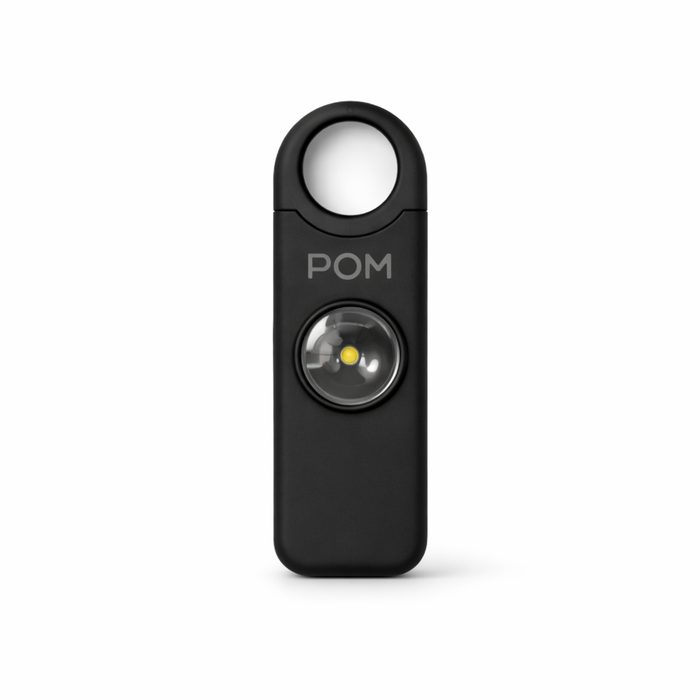
Black POM Personal Alarm

Personal Alarm

130 dB pull-to-activate alarm with a built-in LED light. Clips to keys or a bag, and recharges by USB-C.

Shop Personal Alarm
White POM Key pepper spray with aqua band

POM Key

½ oz pepper spray on your key ring, with a flip-top that won't go off in your bag.

Shop POM Key
White POM Clip pepper spray with aqua band

POM Clip

½ oz pepper spray that clips to a pocket or bag strap, so it's on you, not buried in your luggage.

Shop POM Clip

Common questions.

Can I bring pepper spray on a plane?

Not in a carry-on. On US flights, FAA rules allow one self-defense spray up to 4 fl oz in checked baggage, with a safety mechanism and no more than 2% tear gas, if your airline allows it. Read our full guide to flying with pepper spray before you pack.

Can I take pepper spray on an international trip?

Don't pack it for an international flight. International aviation rules prohibit self-defense sprays in both carry-on and checked bags. Before you buy or carry spray in another country, check that country's law.

Can I ship pepper spray to my hotel instead?

Often, within the US. Check that we ship to that state, that local law allows you to have it and that your hotel or rental accepts packages. We can't ship pepper spray to Alaska, Hawaii, Massachusetts, New York, Washington, DC or Puerto Rico.

What's the most dangerous time of day when traveling?

No hour is proven most dangerous. Surveys show more incidents in the evening, but more people are out then too. Plan your ride back before you go out, and keep the same habits during the day.

What number do I call for an emergency abroad?

It depends on the country, and it isn't always 911. Look it up and save it before you leave. The State Department's page for each country lists local emergency numbers.

What can the US embassy do if something happens?

Consular staff can help you find medical care, explain local resources, contact family and replace your passport. They don't investigate crimes or pay bills. Call local emergency services first for immediate danger.

What if a friend suddenly seems very drunk or unwell?

Stay with them, tell staff and get medical help. Don't let them leave alone or with someone you just met. Figuring out the cause can wait until they're getting care.

Go anywhere with a plan.

Make your plan, check the rules along the way, then pack what fits.

Shop travel essentials