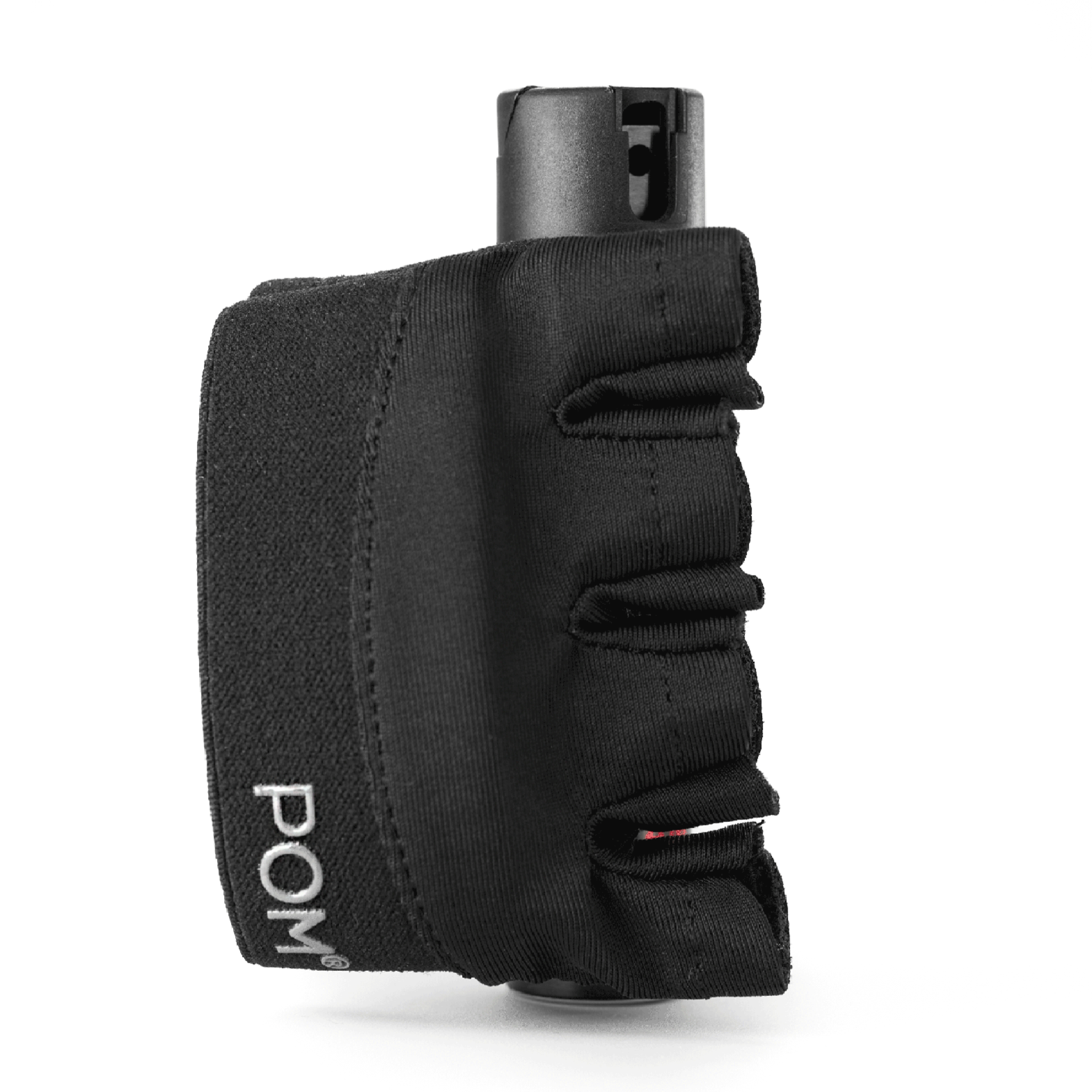
The POM Runner designed specifically as pepper spray for runners, it ensures your running safety, making it a perfect part of your running gear for men and women.
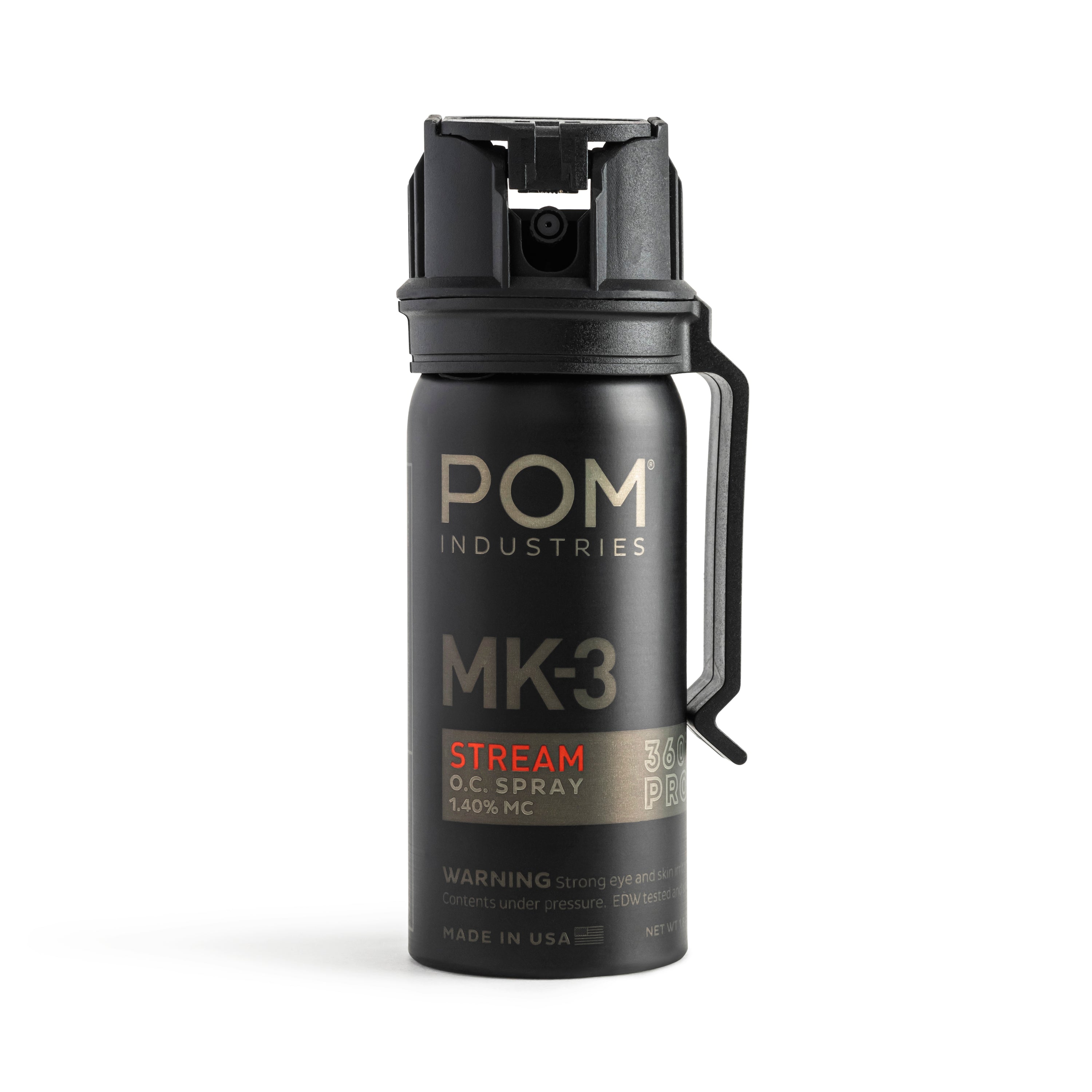
Law enforcement-grade OC spray for those seeking a larger capacity unit compared to traditional pepper sprays. Featuring a sturdy belt clip, the MK3 effortlessly attaches to any standard issue duty belt.
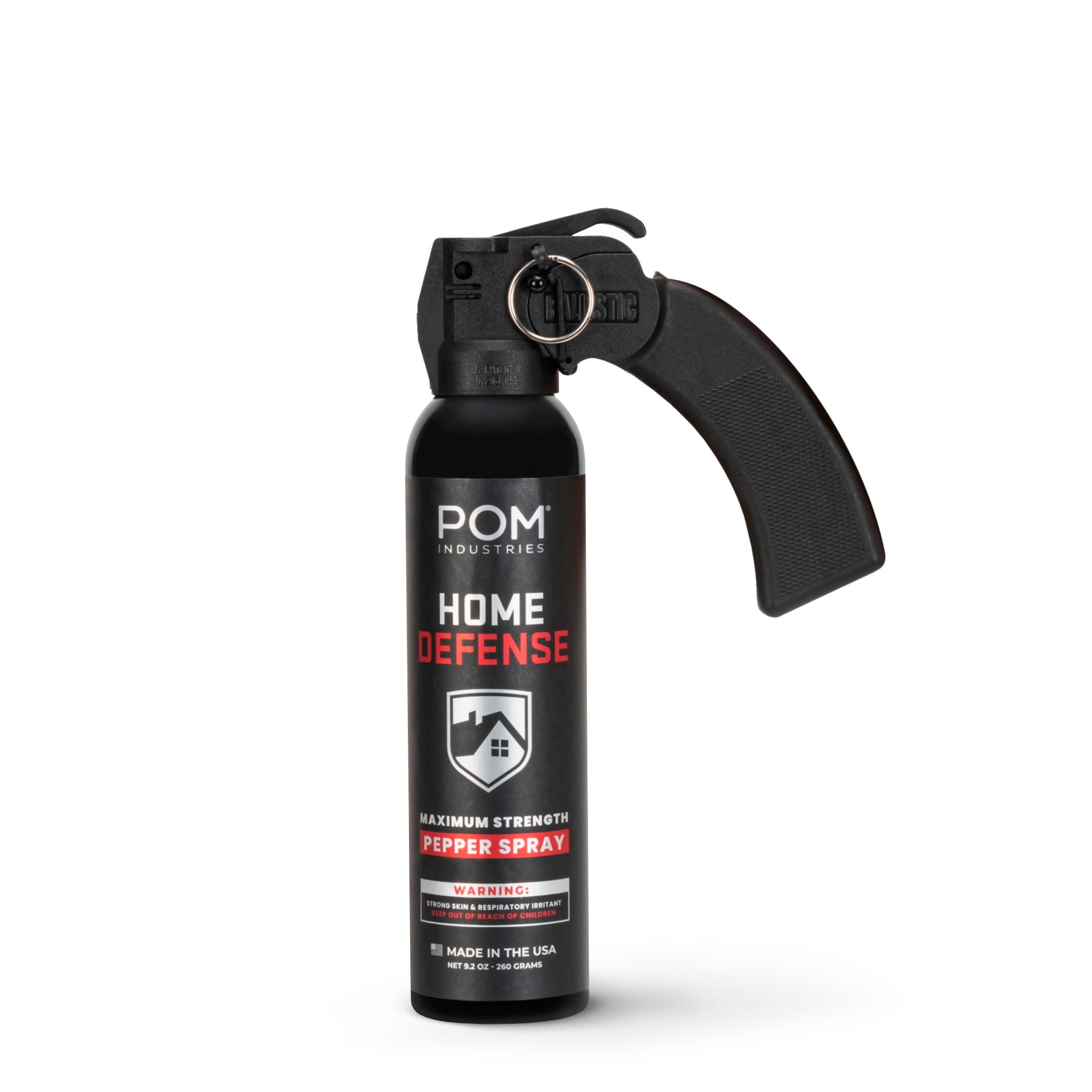
Our largest and sturdiest design features a pistol-grip handle for maximum control and accuracy. Easily stored in bedside drawers, garages, or closets, this unit offers an impressive 20+ foot range, giving you plenty of space and distance to de-escalate a situation.
Plan your route, spot trouble early, move toward help and handle common outdoor emergencies. These are practical steps you can take on every run.
If someone harasses or attacks you, that's on them, not you. Preparing gives you more options, but no routine, route, hour or product guarantees safety.
HARASSMENT
84.2%
of 1,645 US runners surveyed, mostly women, reported harassment while running
DARKNESS
76%
of 2024 US pedestrian deaths with known lighting happened in the dark
PLANNING
1 min
to name your route, a backup, two places to get help and a check-in contact
These figures describe survey answers and traffic deaths, not your odds on any one run. Sources are listed below.
THE NUMBERS
What runner safety statistics really tell us.
Harassment, physical assault and fear of assault are different things. A survey can show how many people recall harassment, but it can't tell you the odds of an attack on a particular run.
How many runners reported harassment
4,709 runners surveyed. Each bar is a separate group, so a full bar is 100% of that group and the two bars don't add up to 100%.
Women: 45.85% reported harassment (619 of 1,350 surveyed)
Men: 17.48% reported harassment
Reported harassment Did not report harassment
In the same survey, 9.56% of all female respondents reported unwanted physical contact.
RunRepeat, published 2021, updated 2023. All respondents run at least weekly. The survey doesn't publish the exact number of men. Self-reported experiences, not annual attack rates.
A separate study found more
In a 2024 peer-reviewed study of 1,645 adult US runners, mostly women, 84.2% reported at least one form of harassment while running. That's a result for one online sample, not a prediction for all runners.
Why the numbers differ
Surveys recruit different people, ask different questions and cover different time periods. That's why these figures shouldn't be averaged or read as a trend.
Is there a safest time to run?
The data can't pick one hour. Surveys show when people report harassment, not the risk per hour on a run.
WHAT TO GO BY
Your route and conditions matter more than the clock.
Safety is a blend of things, not one choice. Check the actual route at the actual time you'll run it.
LightingCan you see the path and be seen?
PeopleIs anyone else around?
Open placesIs somewhere staffed nearby?
TrafficHow close are the cars?
A way to leaveCan you turn around or change route?
Why fewer reports at night doesn't mean night is safer
Surveys count reports, not how many people were out or for how long. Fewer people run late at night, so fewer reports from those hours is what you'd expect, even if each run carried more risk.
In a 2023 NYC street harassment survey, respondents selected afternoon and evening most and night least. The survey didn't measure how many people were out at each time.
Go when other people are out
For many routes that's the morning, when people are heading to work and you're easy to see, or any time other runners are out. You can see more in daylight, but harassment and assault still happen.
Broader crime data doesn't settle it either. One federal report found adult violent victimizations peaked around 9 p.m., but that covers all settings and crimes, not running.
PLAN YOUR RUN
Make your plan before you leave.
A minute of planning gives you more options once you're out. Think about the whole outing, including the trip to and from your car, transit stop or home.
1
Run with others
A running buddy or local run club is one of the best ways to run safer. You have someone beside you, someone to get help, and company on routes runners already use. If you run solo, go where and when other runners are out.
2
Choose a safe place to run
Pick well-used, well-lit areas with people around, and know where you can change direction, shorten the run or reach help. An open store or busy public area can help more than a route that only looks familiar. A sunset run may end in very different conditions than it started.
3
Set up a check-in
Tell someone you trust your route and when you'll be back, and agree on what they should do if you're overdue. Update them if plans change. Carry a charged phone and ID.
4
Protect your location
Decide who can see your activities and your map. On Strava, hiding your start and end points doesn't make an activity private. Review old activities too, and think twice before posting where you are now or a route you repeat.
SAMPLE CHECK-IN TEXT
“Going on a run, river loop, back by 6:30. Keep an eye out, and call me if you haven't heard from me by 6:45!”
NOTICE AND RESPOND
Watch what people do, and leave early.
Focus on what people do, not how they look, and trust your instincts. You don't need to be certain before you change your route.
What to notice on a run and how to respond
WHAT YOU NOTICE
WHAT YOU CAN DO
A person or vehicle keeps following your direction, or keeps approaching after you move away.
Move toward a busy or staffed place and contact help if you feel threatened. Don't wait to prove you're being followed.With a POM Runner, protection is already in your palm while you move.
Someone blocks your path, threatens you, tries to grab you, or pressures you to get in a vehicle or go somewhere isolated.
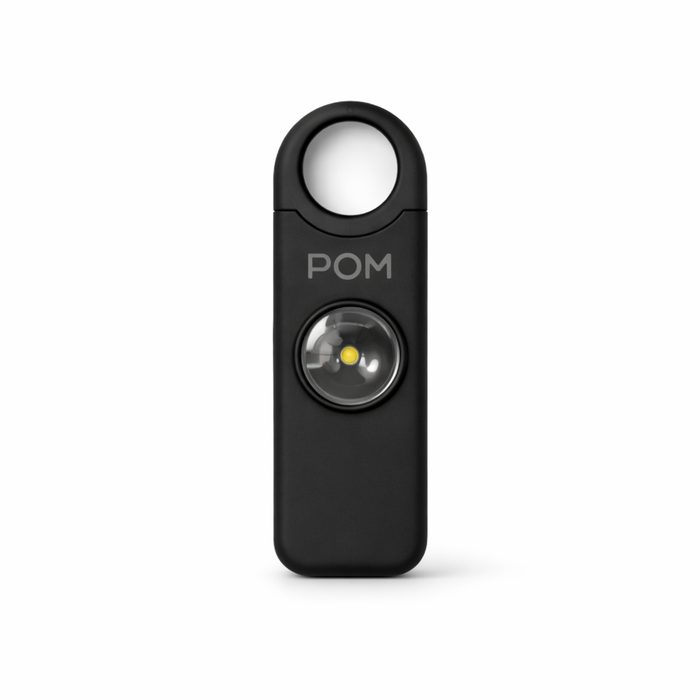
Prioritize distance and an exit. Draw attention, and call 911 when you can do so safely.Pull your POM Personal Alarm to draw attention. If you need to fight back, your POM Runner is ready: flip, aim, press, then get away.
A conversation turns persistent or aggressive after you decline.
You can leave without continuing. Find nearby people or staff if you feel at risk.A POM Personal Alarm clipped to your pack is within reach if it escalates.
A route narrows beside parked vehicles, dense plants, an unlit passage or a closed facility.
Check visibility and room to turn around before you go in. Take another way if your options feel too limited.
You're absorbed in audio or a screen, or can't hear traffic and trail users.
Turn audio down so you can hear around you, and stop somewhere suitable before using your screen.
IF IT HAPPENS
Know your next move.
Read these now, so you aren't working them out in the moment.
1 FOLLOWED
If you think someone is following you
Go to a busy or staffed place and ask for help.
Don't lead them home or take an isolated shortcut.
In immediate danger, call 911. Give your location first, then say what's happening.
TRY SAYING“I think I'm being followed. May I stay here while I call for help?”
2 THREATENED
If you're threatened or approached
Use any exit and create distance.
Shout for help or use an alarm.
Don't stay to argue or record.
If someone demands your property, consider letting it go.
No single response works every time, so do what gets you to safety.
Contact someone you trust, and report it to the police.
If it's safe, note the time, place, what happened and any vehicle details. You don't have to collect evidence before asking police for help.
For repeated following or contact, your local police can help you make a safety plan.
BE SEEN
Traffic is part of personal safety too.
NHTSA recorded 7,080 pedestrian deaths in US traffic crashes in 2024. That count includes people running and jogging, but it isn't specific to runners. Most of those deaths happened in the dark, which is why a light matters on early and late runs.
When US pedestrian deaths happened
Share of 2024 pedestrian deaths by light condition.
76% dark
20% daylight
2% dusk
2% dawn
NHTSA Traffic Safety Facts, 2024 data. Unknown light conditions excluded. These are shares of deaths for all pedestrians, not risk per hour outside, and not evidence about criminal attacks.
FROM POM
POM clip-on safety lights
Beacon and Pulse clip on to help keep you visible on early and late runs.
Coming soon
Face traffic
Use sidewalks where you can. If there isn't one, face oncoming traffic and stay as far from vehicles as possible.
Light yourself up
Wear reflective material and a light in the dark. Choose a route where you can see the surface, people and intersections.
Cross with care
Use intersections or crosswalks, and watch for turning cars and driveways. A walk signal doesn't mean traffic has stopped.
Assume you're unseen
Don't assume a driver sees you. Wait for a clear, complete stop before crossing in front of a vehicle.
STAY READY
Protection only works if you can reach it.
Hands-free pepper spray is always accessible, so you can fight back and get to safety without stopping to dig for it. Any device adds an option, but it can't guarantee the outcome.
Ways to carry pepper spray on a run compared
HOW YOU CARRY IT
WHERE IT IS
WHAT IT TAKES TO USE IT
Glove, like the POM Runner
In your palm
Flip, aim and press
Pocket
At your side, in fabric
Reach in, pull it out, then find the top
Waist pack or armband
Zipped or strapped in
Open or unstrap it, then pull it out
Held loose in your hand
In your hand
Ready, but your grip has to hold it for the whole run
FROM POM
The POM Runner stays in your palm.
A stretch-fit glove holds the unit in your hand, ready when you need it. It fits either hand, and the flip-top keeps it from firing while you run.
Check heat risk, air quality and the forecast before you leave, and change your time, effort or distance to match.
Heat
Stop and move somewhere cool if you feel faint or weak. Confusion, seizures or passing out can signal heat stroke: call 911 and start cooling right away with shade and cool, wet cloths. Don't give drinks to someone who is confused or unconscious.
Lightning
If you hear thunder, get to a substantial building or a fully enclosed hard-topped vehicle. Open shelters and lone trees aren't safe. Wait at least 30 minutes after the last thunder before heading back out.
If a runner collapses
Check that the scene is safe. If they're unresponsive and not breathing normally, or only gasping, call 911, send someone for an AED and start CPR. Follow the dispatcher and the AED prompts.
RUN CHECKLIST
Before you head out.
Run through this list once for each route you use. There's no universal cutoff time, so choose the plan that fits your route and conditions.
Running partnerAsk a buddy or join a local club when you can.
Route and alternativeKnow your route and one backup.
Finish and check-in timeSet when you expect to be back.
Trusted contactAgree on what they'll do if you're overdue.
Two places to get helpPick staffed or busy spots along the way.
What would change the planDecide what would make you turn back or shorten the run.
Phone, ID and gearCheck your phone, ID, lights and safety equipment.
App privacyReview your activity audience and map visibility.
Say where you arePractice giving an intersection, trail marker or landmark.
RUNNING SAFETY GEAR
What to bring on your run.
Start with a charged phone and ID. Then add what fits your route, and check it before you need it.
A compact clip-on light with two LED bars, rated IPX5.
Coming soon
Common questions.
What's the safest time of day to run?+
The data can't pick one hour. There's no national data on attacks per hour spent running, so pick a time when other people are out and compare your actual route, including lighting, people, traffic and ways to leave.
Is it safer to run with a buddy or a club?+
Running with others gives you someone beside you and someone to get help, so it's one of the best habits to build. If you run solo, choose places and times when other runners are out.
What should I do if someone is following me?+
Go to a busy or staffed place and ask for help, and don't lead them home. If there's an immediate threat, call 911 and give your location first.
Does hiding my start and end points on Strava make my run private?+
No. Activity privacy is a separate setting, so an activity set to Everyone stays visible. Set who can see the activity, and hide part or all of the map.
Can I carry pepper spray on my run?+
Rules vary, so check the current rules for where you run and for any venue or race. Follow the product label and practice with a matching inert unit.
How often should I check my safety gear?+
Check lights and any alarm before you need them, and inspect your pepper spray's condition and expiration date.